
Cost
Pure and natural essential oil
✔ Olio essenziale puro al 100% per industria e laboratorio · Disponibilità immediata · Richiedi offerta
Bulk packaging > Essential oils
A wide range of pure and natural absolute oils and essential oils of guaranteed quality, constantly available for any industrial use.
- Code: T1599
- INCI: Saussurea costus
- CAS: 8023-88-9
- EINECS: 639-571-1
- Family: Asteraceae
- Type: pure essential oil (EO)
- Chemotype: Costunolide (about 44%)
- Food flavoring: yes (according to EC Regulation 1334/2008)
- Extraction method: steam distillation
- Purity: 100%
- Origin: India
Extraction
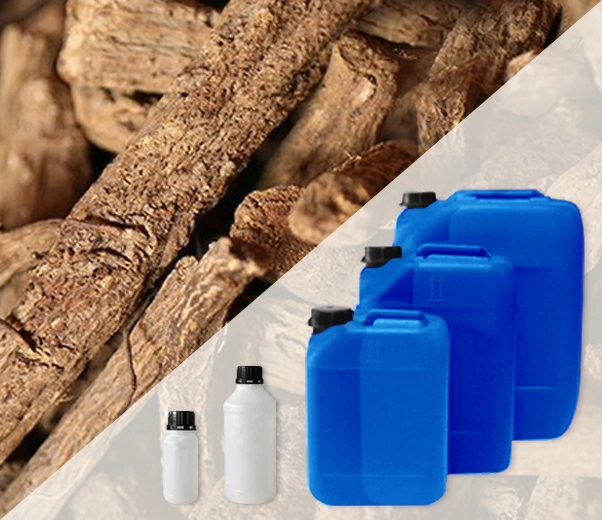
Costo essential oil is obtained by steam distillation of the plant's roots, previously dried and macerated in hot water. It appears as a dark (sometimes almost viscous) reddish-brown liquid that releases a distinctive "animal" note reminiscent of leather, very tenacious, with a distant woody-musty undertone.
Property
Costus essential oil has always symbolized a coveted yet elusive raw material, representing—even today—an extremely rare and precious product; not surprisingly, since ancient times, it has been considered one of the most adulterated raw materials of all.
Non-toxic and—except in exceptional cases—non-irritating, it has pronounced fixative, as well as antitumor, antiseptic, antiviral, stimulant, and tonic properties.
It harmonizes well with the essential oils of agarwood, ambrette, Peruvian balsam, cistus, Ethiopian frankincense, opoponax, patchouli, rose, sandalwood, vetiver, ylang-ylang, as well as oakmoss absolute.
Non-toxic and—except in exceptional cases—non-irritating, it has pronounced fixative, as well as antitumor, antiseptic, antiviral, stimulant, and tonic properties.
It harmonizes well with the essential oils of agarwood, ambrette, Peruvian balsam, cistus, Ethiopian frankincense, opoponax, patchouli, rose, sandalwood, vetiver, ylang-ylang, as well as oakmoss absolute.
Uses
The very small amount of pure, natural Costo distillate available is traditionally used in perfumery, both as a fixative and as a fragrance component, especially when a warm, persistent note is desired. Its use in the food industry, where it was used as a flavoring for confectionery and both alcoholic and non-alcoholic beverages, is no longer common.
The relevant technical and safety documentation for the product is available upon request.
The relevant technical and safety documentation for the product is available upon request.
Botany
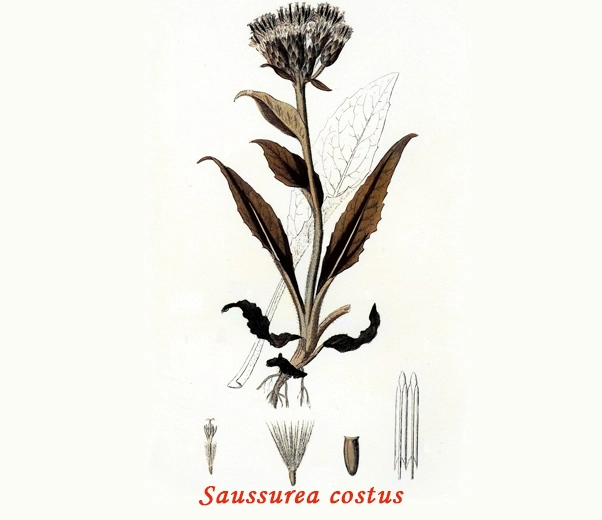
Also known in Hindi as "Kuth", Kos is native to northern India and southwestern China, where it grows at altitudes between 2,500 and 3,000 meters. It is a large, erect perennial plant that can reach two meters in height. It has serrated leaves, numerous dark flowers, and a thick taproot. In the East, it has been used for millennia—in addition to extracting its precious essential oil—both as an incense and as a medicinal remedy for digestive disorders and respiratory conditions.
 Agarwood
 Ambrette seeds
 Balsam of Peru
 Bulgarian rose
 Cistus
 Civet
Civet Egyptian papyrus
 Ethiopian olibanum
 Indian Spikenard
 Musk oil
 Mysore sandalwood
 Oakmoss
 Opoponax
 Patchouli
 Turkish rose
 Vetiver Haiti
 White Musk
 Ylang-ylang 1°
 Home fragrances
 Aroma chemicals
 Measuring instruments
 Containers
 Fine perfumery fragrances
 Cost
Cost