
Scots pine
Pure essential oil of conventional origin
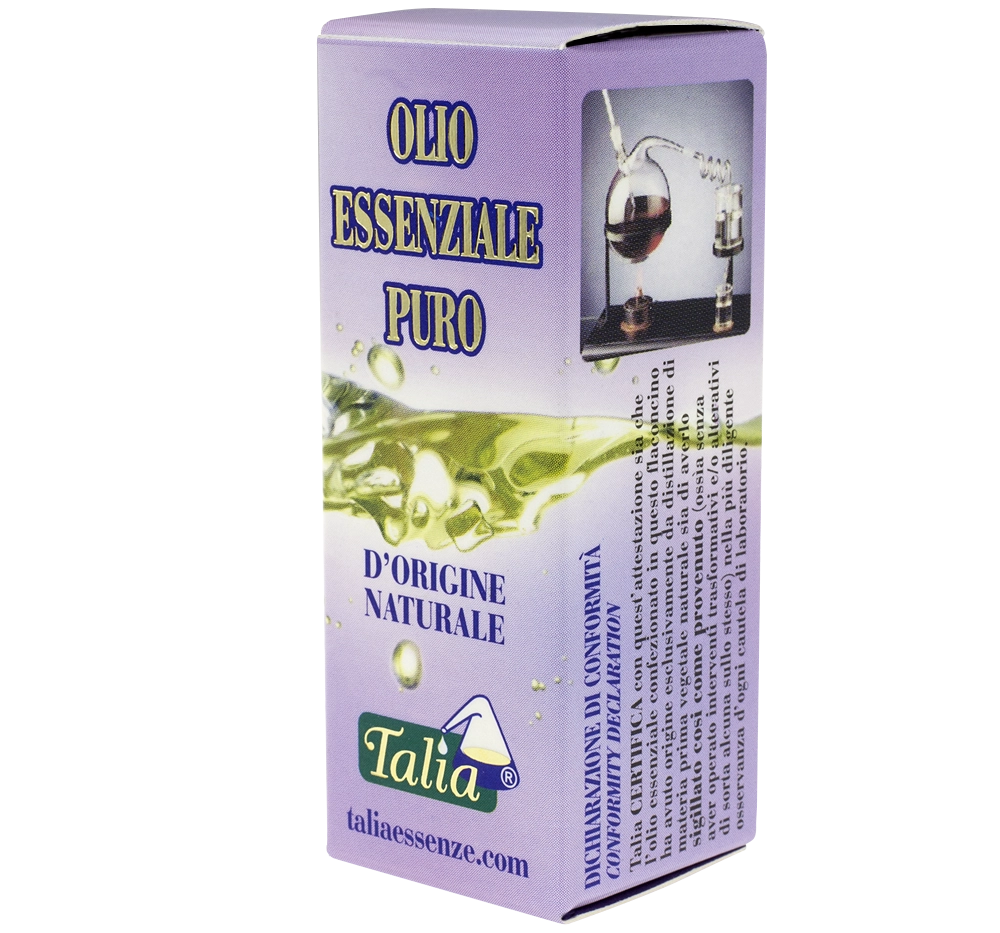
Confezione: 11.3 ml bottle.
-
7,90 €
✔ 100% pure and natural · Since 1993, selected GMO-free essential oils · Certified quality · Shipping within 24/48h
Essential oils
Made exclusively from pure natural distillates of excellent quality, totally free from stabilizers and/or fixatives of any kind, our essential oils represent the best that can be found by those who, without any “ ifs ” or “ buts ”, demand – in the literal sense of the term – the 100% quintessence of nature .
- Code: 21540
- INCI: Pinus sylvestris
- CAS: 8023-99-2
- Family: Pinaceae
- Type: pure essential oil (EO)
- Variety: conventional
- Food flavoring: yes (according to EC Regulation 1334/2008)
- Extraction method: dry distillation
- Purity: 100%
- Origin: Germany
Related accessories

Description
100% pure and concentrated essential oil of natural origin in an 11.3 ml (0.34 fl. oz. ) glass bottle ; this product is completely free from: stabilizers, fixatives, pesticides, GMOs and treatments (even of semi-finished products) with gamma rays and has been packaged and sealed as it came, i.e., without having undergone any transformation and/or alteration of any kind and in the most diligent observance of all laboratory precautions. In accordance with EC Regulation 1334/2008 of the European Parliament and of the Council of the European Union, provided they are highly pure, many essential oils (including that of Pino sivestre) are declared "food flavourings" and can therefore be taken as supplements.
As per the declaration of conformity published in the brochure, this essential oil was obtained exclusively from the processing of natural plant raw materials. The
information leaflet included with the packaging contains all the information relating to the natural preparation, including the analytical bulletin, the declaration of conformity, the botanical description, the possibility of use as a " food flavoring", etc.
Attention
Absolutely avoid the " do-it-yourself" internal use of essential oils,as this can be highly dangerous. It is advisable to always proceed with a medical prescription issued exclusively by a competent and qualified professional.As per the declaration of conformity published in the brochure, this essential oil was obtained exclusively from the processing of natural plant raw materials. The
information leaflet included with the packaging contains all the information relating to the natural preparation, including the analytical bulletin, the declaration of conformity, the botanical description, the possibility of use as a " food flavoring", etc.
Extraction
Scots pine essential oil is obtained by dry distillation of needles and branches. It appears as a pale yellow (almost colorless) liquid with a strong, dry, balsamic pine-like scent.
Affinity
Scots Pine essential oil blends well with the essential oils of: Buchu, Cedar, Clary sage,Copaiba,Cypress, Eucalyptus, Juniper, Lavender, Lemon, Marjoram, Niaouli, Ravensara,Rosemary and Tea tree.
Properties
Native Americans stuffed their beds with pine needles, exploiting their insect-repellent properties. In Nordic folk medicine, pine has a long-standing tradition, particularly in the treatment of respiratory problems. Scots pine essential oil has antiseptic, antiviral, bactericidal, balsamic, and deodorant properties; when used in moderation, it is completely non-toxic and non-irritating. In the past, it was a natural remedy for pediculosis (lice) and was also used as an anti-catarrhal remedy.
Uses
Scots pine essential oil is commonly used in cosmetics, soaps, and personal hygiene products (especially bath products). The food industry sometimes uses it as a flavoring ingredient in alcoholic and non-alcoholic beverages.
Botany
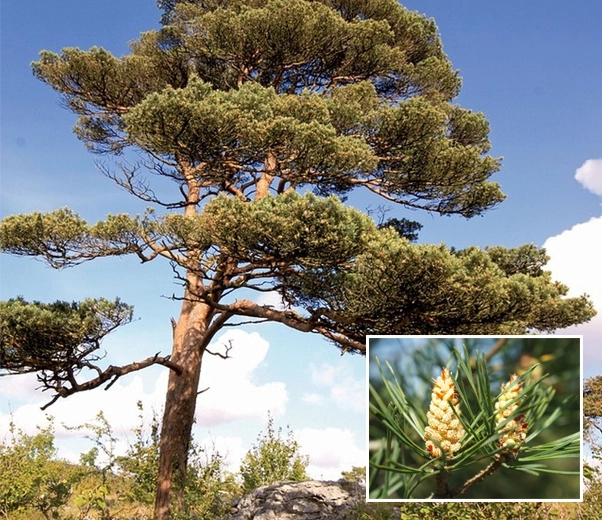
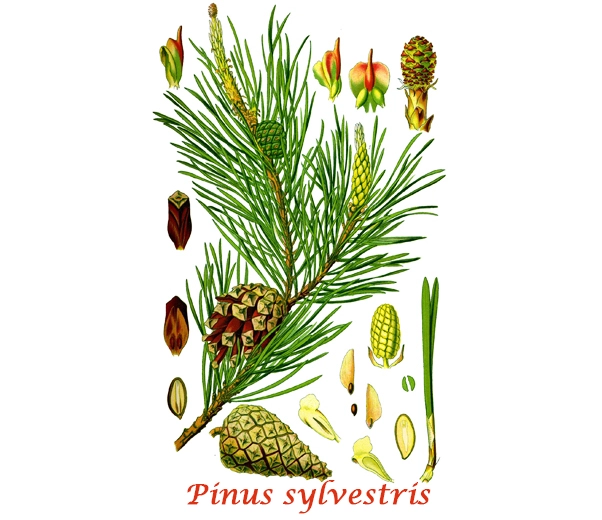
Commonly known as the "common pine", the Scots pine is native to Eurasia. It is a large evergreen tree, up to forty meters tall, with long, stiff needle-like leaves, deeply fissured reddish-brown bark, and pointed cones. It is cultivated in Russia, Scandinavia, Finland, and the United States primarily for its modest timber and turpentine.
Related topics
Related products
 Bay laurel
 Buchu
Buchu Celery
 Cistus
 Citron
 Citronella
 Clary sage
 Copaiba
 Coriander
 Cypress
 Dwarf mountain pine
 English lavender
 Eucalyptus
 Italian lemon
 Juniper berries
 Larch
Larch Lemon eucalyptus
 Marjoram
 Mugwort
 Niaouli
 Oedo-koh pine
 Oregano
 Ravensara
 Rosemary
 Scots pine
 Scots pine
1000 ml. Scots pine
25.0 lt. Siberian pine
 Siberian pine
 Silver fir
 Spruce
 Swiss pine
 Tea tree oil
 Valerian
 Winter savory
 Yarrow
 Fine perfumery fragrances
 Vegetable oils for cosmetic use
 Essence diffusers
 Scots pine
 Vanilla