Ravensara
Pure essential oil of conventional origin
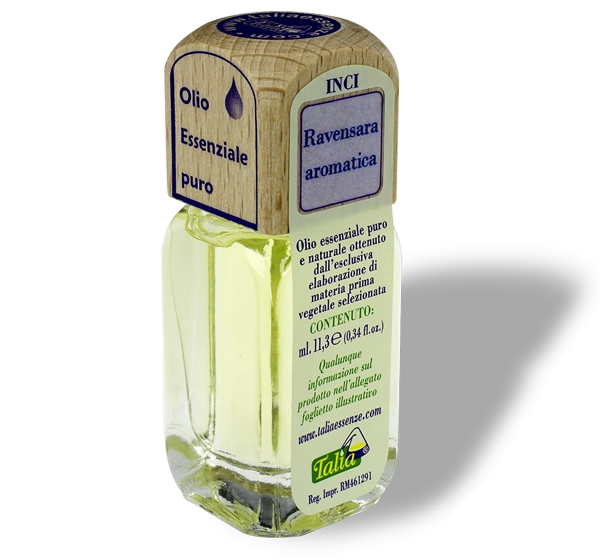
Confezione: 11.3 ml bottle.
-
14,90 €
✔ 100% pure and natural · Since 1993, selected GMO-free essential oils · Certified quality · Shipping within 24/48h
Essential oils
Made exclusively from pure natural distillates of excellent quality, totally free from stabilizers and/or fixatives of any kind, our essential oils represent the best that can be found by those who, without any “ ifs ” or “ buts ”, demand – in the literal sense of the term – the 100% quintessence of nature .
- Code: 21545
- INCI: Ravensara aromatica
- CAS: 91770-56-8
- Family: Lauraceae
- Type: pure essential oil (EO)
- Variety: conventional
- Food flavoring: yes (according to EC Regulation 1334/2008)
- Extraction method: steam distillation
- Purity: 100%
- Origin: Madagascar
Related accessories

Description
100% pure and concentrated essential oil of natural origin in an 11.3 ml (0.34 fl. oz.) glass bottle ; this product is completely free from: stabilizers, fixatives, pesticides, GMOs and treatments (even of semi-finished products) with gamma rays and has been packaged and sealed as it came, i.e., without having undergone any transformation and/or alteration of any kind and in the most diligent observance of all laboratory precautions. In accordance with EC Regulation 1334/2008 of the European Parliament and of the Council of the European Union, provided they are highly pure, many essential oils (including Ravensara essential oil) are declared "food flavourings" and can therefore be taken as supplements.
Absolutely avoid the " do-it-yourself" internal use of essential oils,as this can be highly dangerous. It is advisable to always proceed with a medical prescription issued exclusively by a competent and qualified professional.
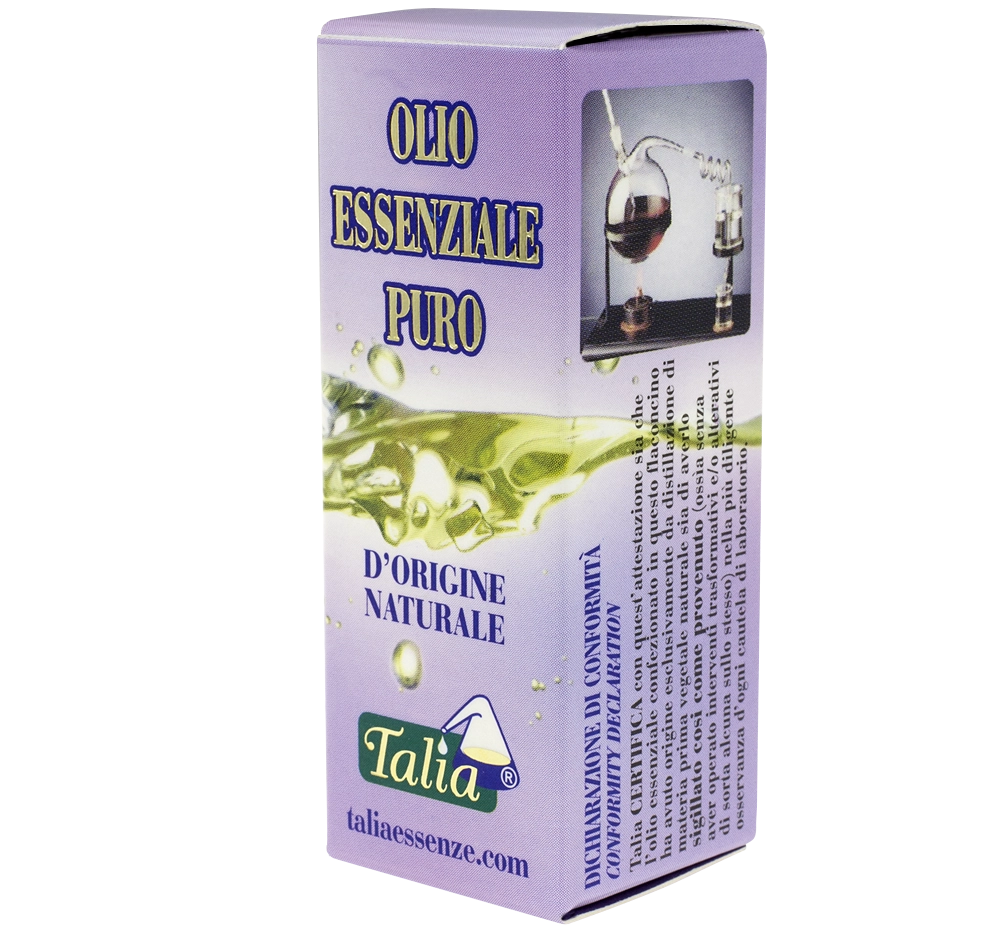
As per the declaration of conformity published in the brochure, this essential oil was obtained exclusively from the processing of natural plant raw materials. The
information leaflet included with the packaging contains all the information relating to the natural preparation, including the analytical bulletin, the declaration of conformity, the botanical description, the possibility of use as a " food flavoring", etc.
Attention
Absolutely avoid the " do-it-yourself" internal use of essential oils,as this can be highly dangerous. It is advisable to always proceed with a medical prescription issued exclusively by a competent and qualified professional.
As per the declaration of conformity published in the brochure, this essential oil was obtained exclusively from the processing of natural plant raw materials. The
information leaflet included with the packaging contains all the information relating to the natural preparation, including the analytical bulletin, the declaration of conformity, the botanical description, the possibility of use as a " food flavoring", etc.
Extraction
Ravensara essential oil is extracted by steam distilling the plant's fresh leaves and sprigs. It appears as a clear, almost colorless (or very pale yellow) liquid that releases a fresh, spicy, vaguely aniseed scent.
Affinity
Ravensara essential oil blends well with most essential oils, but particularly with those extracted from: Cinnamon, Copaiba, Eucalyptus, Juniper, Laurel, Lavender, Peppermint, Oregano, Black Pepper, Tea Tree, Red Thyme, and Vetiver.
Properties
Ravensara essential oil, non-toxic and non-irritating, has antiviral, antibacterial, tonic, and expectorant properties. A typical herbal remedy for colds, it is also excellent for treating all types of herpes. It is also traditionally considered a natural stimulant of the nervous system: indeed, it is believed to help combat physical and nervous fatigue. Hence the nickname "the panacea essence". When used in a diffuser, this essential oil also acts as a powerful natural antiseptic.
Uses
Ravensara essential oil has always been most widely used as a raw material in the pharmaceutical industry.
Botany
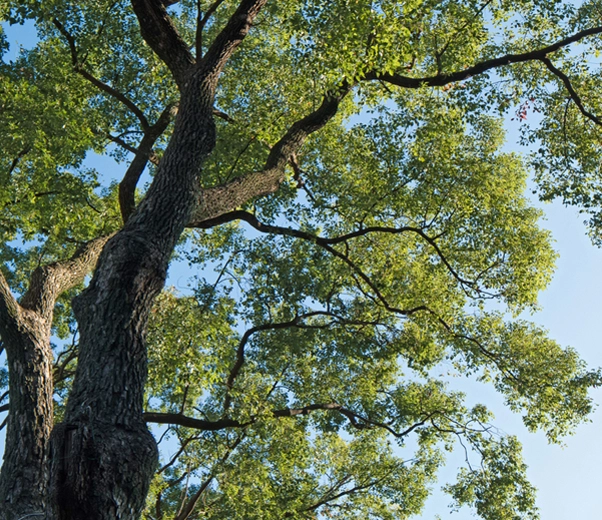
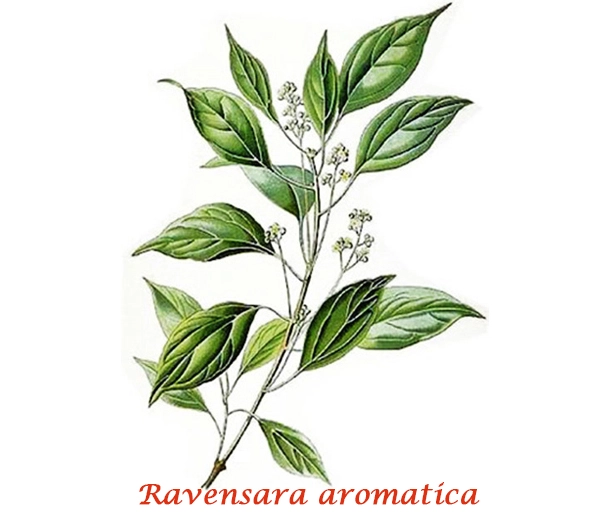
Also known as "Hazomanitra", it is important not to confuse it with " Raventsara", which is a botanical species in its own right: the latter is in fact a variety of camphor (from which another essential oil is also extracted) which, however, has nothing to do with that obtained from Ravensara aromatica, a large evergreen tree native to the tropical forests of Madagascar and the Comoros Islands; Ravensara has shiny, leathery, oval-shaped leaves, yellow-green flowers, and a trunk with thick reddish bark that can reach a meter in diameter and thirty meters in height.
To understand the origin of the name, it is important to know that in the Malagasy language "Ravina" means "leaf" while "tsara" means "beneficial".
To understand the origin of the name, it is important to know that in the Malagasy language "Ravina" means "leaf" while "tsara" means "beneficial".
Related topics
Related products
 African geranium
 African geranium
 Bay laurel
 Black pepper
 Cinnamon bark
 Cinnamon leaves
 Common sage
 Copaiba
 Dill
Dill Dwarf mountain pine
 English lavender
 Eucalyptus
 Grapefruit
 Greek mastic
 Helichrysum
 Juniper berries
 Marjoram
 Melissa
 Melissa
 Mugwort
 Myrtle
 Myrtle
 Oregano
 Patchouli
 Patchouli
 Peppermint
 Pink grapefruit
 Pink pepper
 Red thyme
 Roman chamomile
 Scots pine
 Siberian pine
 Siberian pine
 Silver fir
 Spruce
 Swiss pine
 Tea tree oil
 Thuja
Thuja Verbena
 Vetiver Haiti
 Fine perfumery fragrances
 Vegetable oils for cosmetic use
 Essence diffusers
 Ravensara