

Oregano
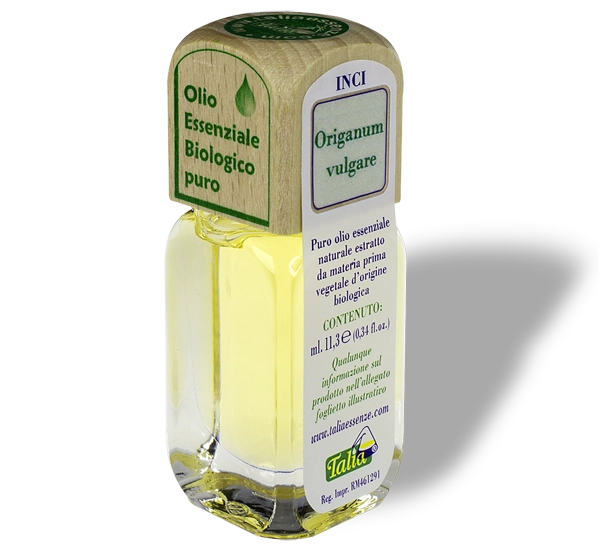
Pure essential oil of organic origin
Confezione: 11.3 ml bottle.
-
11,70 €
✔ 100% pure and natural · Since 1993, selected GMO-free essential oils · Certified quality · Shipping within 24/48h
Essential oils
Made exclusively from pure natural distillates of excellent quality, totally free from stabilizers and/or fixatives of any kind, our essential oils represent the best that can be found by those who, without any “ ifs ” or “ buts ”, demand – in the literal sense of the term – the 100% quintessence of nature .
- Code: 21534
- INCI: Origanum vulgare
- CAS: 8007-11-2
- Family: Lamiaceae
- Type: pure essential oil (EO)
- Variety: organic (cert. CE-009577-2015)
- Food flavoring: yes (according to EC Regulation 1334/2008)
- Extraction method: steam distillation
- Purity: 100%
- Origin: Spain
Related accessories

Description
100% pure and natural essential oil of documented organic origin (Certificate CE-009577-2015) in an 11.3 ml (0.34 fl. oz.) glass bottle ; this product, also suitable for food use according to EC Regulation 1334/2008, is completely free from: stabilizers, fixatives, pesticides, GMOs and treatments (even of semi-finished products) with gamma rays and has been packaged and sealed as it came, i.e., without having undergone any transformation and/or alteration of any kind and in the most diligent observance of all laboratory precautions. According to EC Regulation 1334/2008 of the European Parliament and of the Council of the European Union, provided they are very pure, many essential oils (including Oregano) are declared "food flavorings" and can therefore be taken as supplements.
As per the declaration of conformity published in the brochure, the plant-based raw materials selected and processed for the production of this essential oil are of scrupulous and certified organic origin. This, in concrete terms, guarantees the provenance of the material from a farm management system that substantially limits the use of fertilizers and pesticides, in order to protect both the harvest and the environment, as well as promote sustainable agricultural development.
The information leaflet included with the packaging contains all the information regarding the natural preparation, including the analytical bulletin, declaration of conformity, botanical description, and the possibility of use as a " food flavoring", etc.
Attention
Absolutely avoid the " do-it-yourself" internal use of essential oils,as this can be highly dangerous. It is advisable to always proceed with a medical prescription issued exclusively by a competent and qualified professional.As per the declaration of conformity published in the brochure, the plant-based raw materials selected and processed for the production of this essential oil are of scrupulous and certified organic origin. This, in concrete terms, guarantees the provenance of the material from a farm management system that substantially limits the use of fertilizers and pesticides, in order to protect both the harvest and the environment, as well as promote sustainable agricultural development.
The information leaflet included with the packaging contains all the information regarding the natural preparation, including the analytical bulletin, declaration of conformity, botanical description, and the possibility of use as a " food flavoring", etc.
Extraction
Oregano essential oil is obtained by steam distillation of the dried flowering plant. It appears as a pale yellow liquid (which turns brown as it ripens) with an unmistakable warm, spicy, and herbaceous aroma.
Affinity
Oregano essential oil harmonizes well with the essential oils of: Camphor, Cedar, Citronella, Lavender, Pine, Ravensara, Rosemary as well as with Oakmoss absolute.
Properties
Oregano is a plant with an ancient medicinal reputation, used as a natural remedy for various respiratory and digestive problems. The essential oil extracted from it has strong antimicrobial, antiviral, fungicidal, and rubefacient properties. In the past, it was used as a dermatological medication to treat insect bites.
Toxic, irritating, and notoriously stinging, it should never be applied directly to the skin, but only in low concentrations, diluted first in a vegetable oil (such as almond or sesame).
Toxic, irritating, and notoriously stinging, it should never be applied directly to the skin, but only in low concentrations, diluted first in a vegetable oil (such as almond or sesame).
Uses
Oregano essential oil is typically used as a fragrance component in soaps, colognes, and perfumes (especially in men's fragrances) as well as in the food industry as a meat flavoring.
Botany
Native to Europe, oregano is now cultivated worldwide.
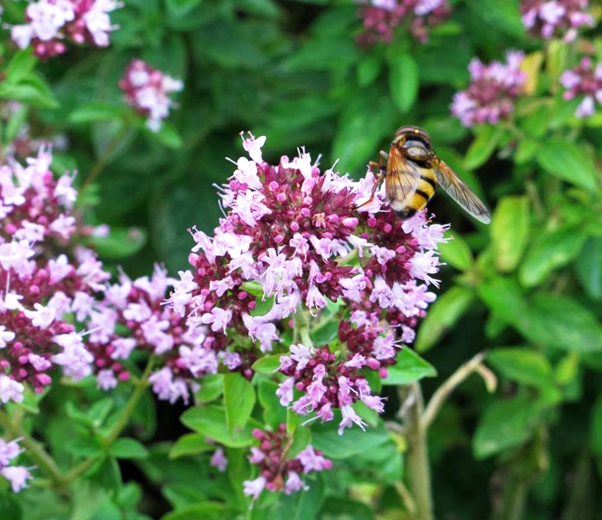
It is a creeping herbaceous plant with a woody stem that grows up to ninety centimeters tall, with small, dark green leaves and pinkish-white flowers.
There are over thirty varieties, and perhaps for this reason, it is often classified botanically inaccurately (it is often confused with marjoram).
It is a creeping herbaceous plant with a woody stem that grows up to ninety centimeters tall, with small, dark green leaves and pinkish-white flowers.
There are over thirty varieties, and perhaps for this reason, it is often classified botanically inaccurately (it is often confused with marjoram).
 Apple mint
 Cade
Cade Camphor
 Citron
 Citronella
 Dwarf mountain pine
 English lavender
 Garlic
 Mustard
 Oakmoss
 Pink pepper
 Ravensara
 Rosemary
 Scots pine
 Siberian pine
 Swiss pine
 Wintergreen
 Fine perfumery fragrances
 Vegetable oils for cosmetic use
 Essence diffusers
 Oregano
 Tarragon