Lemon Verbena
Pure essential oil of conventional origin
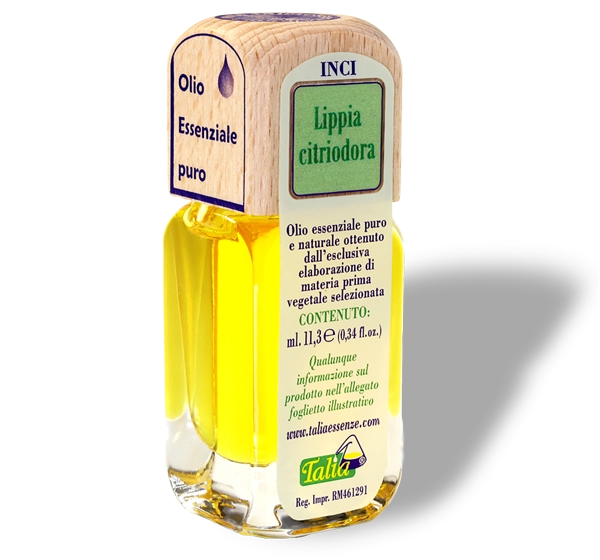
Confezione: 11.3 ml bottle.
-
39,80 €
✔ 100% pure and natural · Since 1993, selected GMO-free essential oils · Certified quality · Shipping within 24/48h
Essential oils
Made exclusively from pure natural distillates of excellent quality, totally free from stabilizers and/or fixatives of any kind, our essential oils represent the best that can be found by those who, without any “ ifs ” or “ buts ”, demand – in the literal sense of the term – the 100% quintessence of nature .
- Code: 21266
- INCI: Lippia citriodora
- CAS: 8024-12-2
- Family: Verbenaceae
- Type: pure essential oil (EO)
- Variety: conventional
- Food flavoring: yes (according to EC Regulation 1334/2008)
- Extraction method: steam distillation
- Purity: 100%
- Origin: France
Related accessories

Description
100% pure and concentrated essential oil of natural origin in an 11.3 ml (0.34 fl. oz.) glass bottle ; this product is completely free from: stabilizers, fixatives, pesticides, GMOs and gamma irradiation treatments (even of semi-finished products) and has been packaged and sealed as it came, i.e., without having undergone any transformation and/or alteration of any kind and in the most diligent observance of all laboratory precautions. In accordance with EC Regulation 1334/2008 of the European Parliament and of the Council of the European Union, provided they are highly pure, many essential oils (including Verbena) are declared "food flavourings" and can therefore be taken as supplements.
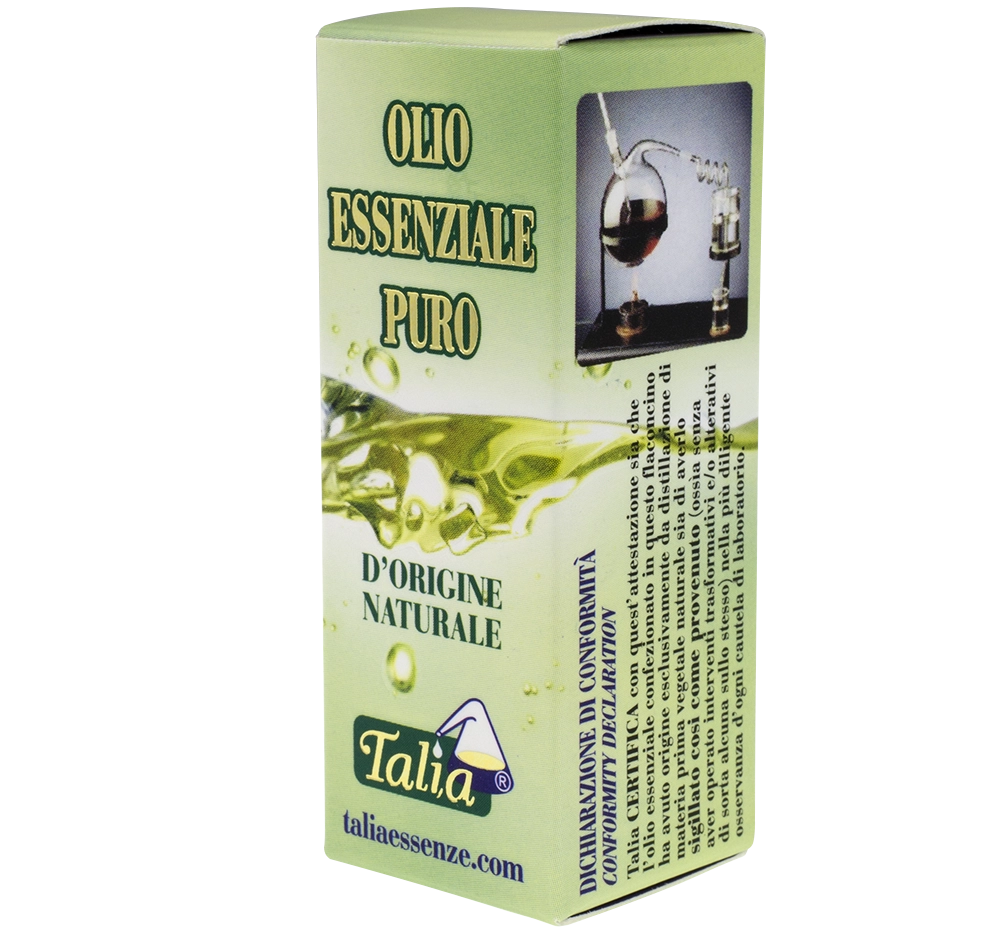
As per the declaration of conformity published in the brochure, this essential oil was obtained exclusively from the processing of natural plant raw materials. The
information leaflet included with the packaging contains all the information relating to the natural preparation, including the analytical bulletin, the declaration of conformity, the botanical description, the possibility of use as a " food flavoring", etc.
Attention
Absolutely avoid the " do-it-yourself" internal use of essential oils,as this can be highly dangerous. It is advisable to always proceed with a medical prescription issued exclusively by a competent and qualified professional.As per the declaration of conformity published in the brochure, this essential oil was obtained exclusively from the processing of natural plant raw materials. The
information leaflet included with the packaging contains all the information relating to the natural preparation, including the analytical bulletin, the declaration of conformity, the botanical description, the possibility of use as a " food flavoring", etc.
Extraction
Verbena essential oil is obtained by steam distilling all the green parts of the plant and appears as a clear liquid with a light olive or yellowish color and a fresh, lemony-fruity scent with floral undertones.
Affinity
Verbena essential oil harmonizes well with the essential oils of: Bergamot, Cedar, Elemi, Frankincense, Lemon, Melissa, Neroli, Olibanum, Palmarosa, Ravensara and with citrus oils in general.
Properties
Dried verbena leaves have been used for centuries to prepare herbal teas and home-made liqueurs. Verbena essential oil, non-toxic and non-irritating, is known in aromatherapy for its antiseptic, antispasmodic, and sedative properties. The natural citral contained in this oil can cause phototoxicity; therefore, if used on the skin, it is advisable to dilute it beforehand in a vegetable oil (almond or sesame).
Uses
Used in perfumery for over two centuries to prepare so-called "citrus colognes" (such as the famous "Eau de Verveine", still popular in Europe and America), verbena essential oil is now very limited in use due to recent restrictions imposed by IFRA regulations. Luxury cosmetics and soaps no longer contain this prized ingredient with its sweet citrus notes, as it is produced on a much smaller scale; this has made it an even more precious and elusive raw material than in the past. It should be remembered, however, that it has always been a difficult task to source authentic (i.e., pure and natural) verbena essential oil, as guaranteed by our offerings. Unfortunately, the prevailing market trend for this specific natural distillate is to adulterate (if not completely replace) it with banal citrus blends of modest quality.
Botany
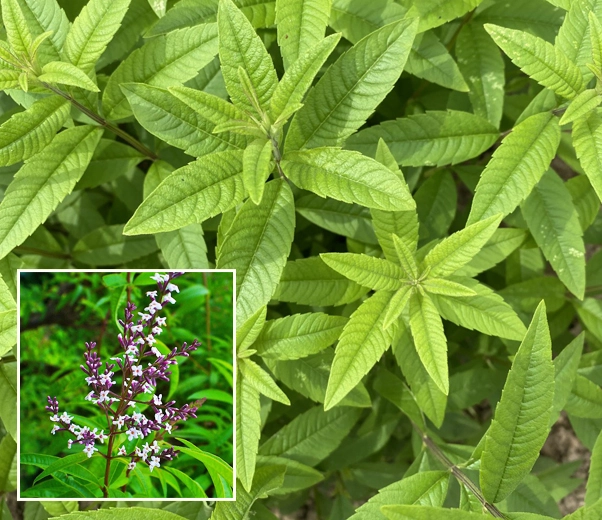
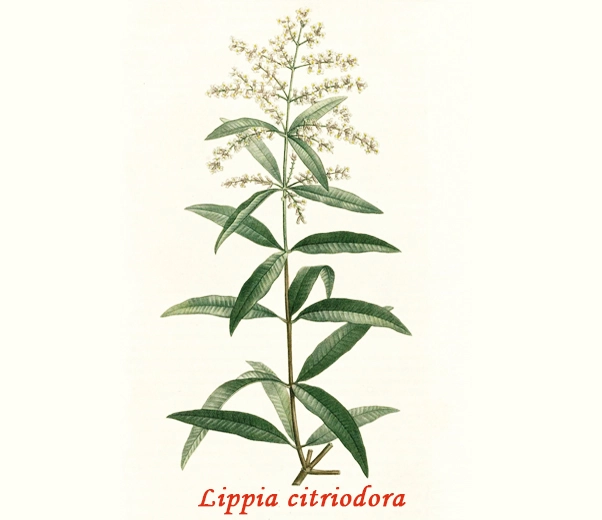
Also known as "lemon verbena", verbena is native to Chile and Argentina. It is currently cultivated in France, Tunisia, Algeria, and China. It is an elegant perennial shrub up to five meters tall, with a woody stem, lanceolate green leaves, and purple flowers. It is often found as an ornamental plant in gardens.
 Bitter orange
 Elemi
Elemi Ethiopian olibanum
 Grapefruit
 Green tangerine
 Italian lemon
 Lemongrass
 Litsea cubeba
 Melissa
 Melissa
 Neroli
 Palmarosa
 Sudan incense
 Sweet orange
 Verbena
 Fine perfumery fragrances
 Vegetable oils for cosmetic use
 Essence diffusers
 Lemon Verbena
 Opoponax
 Matricaria chamomile
 Liquid storax
 Marjoram
 Pure linalool