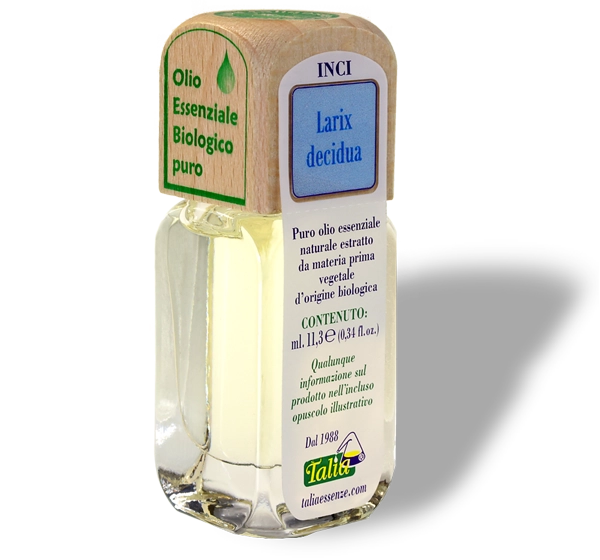


Larch
Pure essential oil of organic origin
Confezione: 11.3 ml bottle.
-
12,60 €
✔ 100% pure and natural · Since 1993, selected GMO-free essential oils · Certified quality · Shipping within 24/48h
Essential oils
Made exclusively from pure natural distillates of excellent quality, totally free from stabilizers and/or fixatives of any kind, our essential oils represent the best that can be found by those who, without any “ ifs ” or “ buts ”, demand – in the literal sense of the term – the 100% quintessence of nature .
- Code: 21594
- INCI: Larix decidua
- CAS: 91722-66-6
- Family: Pinaceae
- Type: pure essential oil (EO)
- Variety: organic (cert. ABCert 1HWL4BVLQWBGG)
- Food flavoring: yes (according to EC Regulation 1334/2008)
- Extraction method: steam distillation
- Purity: 100%
- Origin: Italy
Related accessories

Description
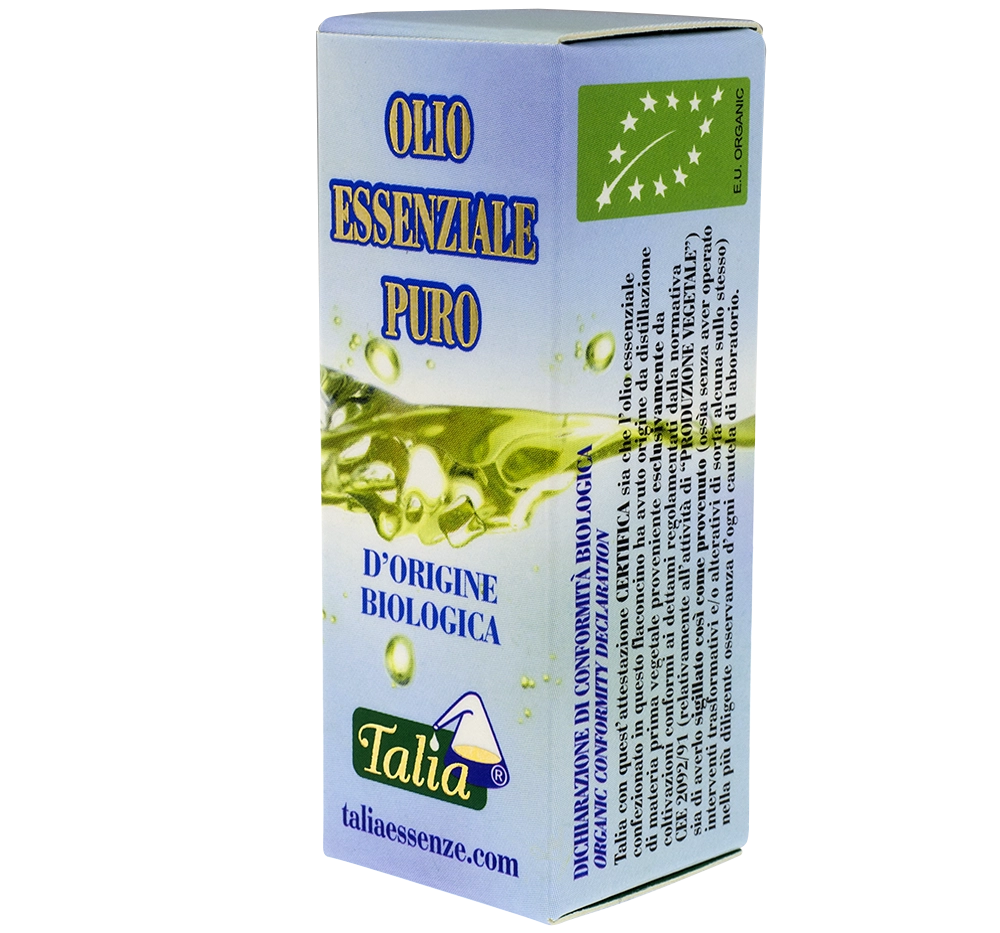
100% pure and natural essential oil of documented organic origin (ABCert 1HWL4BVLQWBGG Certificate) in an 11.3 ml (0.34 fl. oz.) glass bottle ; this product, also suitable for food use in accordance with EC Regulation 1334/2008, is completely free from: stabilizers, fixatives, pesticides, GMOs and treatments (even of semi-finished products) with gamma rays and has been packaged and sealed as it came, i.e., without having undergone any transformation and/or alteration of any kind and in the most diligent observance of all laboratory precautions. In accordance with EC Regulation 1334/2008 of the European Parliament and of the Council of the European Union, provided they are highly pure, many essential oils (including Larch) are declared "food flavorings" and can therefore be taken as supplements.
As per the declaration of conformity published in the brochure, the plant-based raw materials selected and processed for the production of this essential oil are of scrupulous and certified organic origin. This, in concrete terms, guarantees the provenance of the material from a farm management system that substantially limits the use of fertilizers and pesticides, in order to protect both the harvest and the environment, as well as promote sustainable agricultural development.
The information leaflet included with the packaging contains all the information regarding the natural preparation, including the analytical bulletin, declaration of conformity, botanical description, and the possibility of use as a " food flavoring", etc.
Attention
Absolutely avoid the " do-it-yourself" internal use of essential oils,as this can be highly dangerous. It is advisable to always proceed with a medical prescription issued exclusively by a competent and qualified professional.As per the declaration of conformity published in the brochure, the plant-based raw materials selected and processed for the production of this essential oil are of scrupulous and certified organic origin. This, in concrete terms, guarantees the provenance of the material from a farm management system that substantially limits the use of fertilizers and pesticides, in order to protect both the harvest and the environment, as well as promote sustainable agricultural development.
The information leaflet included with the packaging contains all the information regarding the natural preparation, including the analytical bulletin, declaration of conformity, botanical description, and the possibility of use as a " food flavoring", etc.
Extraction
Larch essential oil is obtained by steam distillation of branches and needles and appears as a transparent, almost colorless liquid that releases a strong resinous, woody, balsamic scent with a spicy undertone.
Affinity
Larch essential oil harmonizes well with the essential oils of: Ambrette, Orange, Bergamot, Moroccan Chamomile, Cardamom, Cedar, Cypress, Cistus, Juniper, Mandarin, Nutmeg, Frankincense, Pine, Clary Sage, Sandalwood as well as with Oakmoss absolute.
Properties
In the folk pharmacopoeia of Nordic peoples, essential oils extracted from pine trees have a long tradition, especially as remedies for various respiratory problems. Larch essential oil, non-toxic and non-irritating, is an unusual yet noble conifer essence, prized in aromatherapy for its vaguely spicy notes. It possesses cough suppressant, expectorant, antiseptic, antiviral, balsamic, and deodorizing properties, which can be fully exploited using a diffuser.
Uses
A rather rare distillate, larch oil is occasionally used in perfumery as a resinous-spicy base for creating natural woodland notes, as well as a fragrance component in personal hygiene products (lotions). Its use as a flavoring for grappa is undoubtedly better known. It is rarely used in pharmacies, soap making, and/or wax making.
Botany
Also known as the European Larch, it is a tall tree that grows spontaneously in the mountainous regions of Central Europe (the Alps, Carpathians, and Sudetes). It has short, light green needles and reddish-gray bark. A very long-lived species (living over three centuries), it is distinguished by the distinction of being the only deciduous conifer in the Northern Hemisphere (it sheds its needles during the cold season). A single specimen—which can exceed fifty meters in height—produces both male and female inflorescences, respectively orange-yellow and purplish-pink (the latter, after maturation, lignify, becoming pine cones from which the winged seeds fall). The wood, not very elastic and very resinous, has long been prized for making windows and doors.
 Ambrette seeds
 Bitter orange
 Calabrian Bergamot
 Cardamom
 Cistus
 Clary sage
 Dwarf mountain pine
 Ethiopian olibanum
 Galangal
 Green tangerine
 Juniper berries
 Moroccan chamomile
 Mysore sandalwood
 Nutmeg
 Oakmoss
 Scots pine
 Siberian pine
 Sweet orange
 Swiss pine
 Fine perfumery fragrances
 Vegetable oils for cosmetic use
 Essence diffusers
 Larch
Larch Neroli