Greek mastic
Pure essential oil of conventional origin
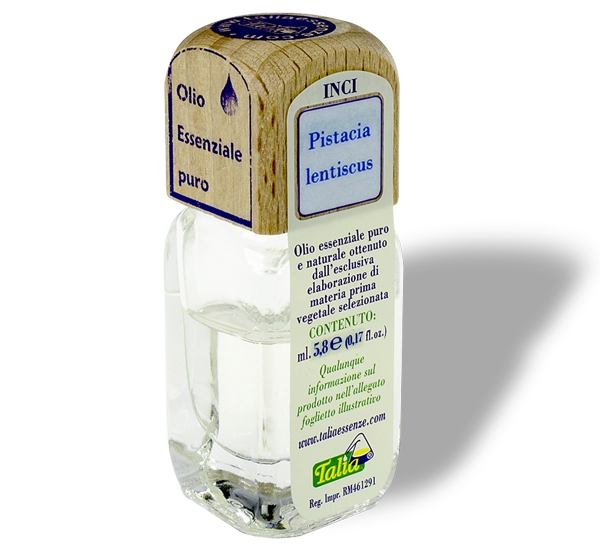
Confezione: 5.8 ml bottle.
-
65,60 €
✔ 100% pure and natural · Since 1993, selected GMO-free essential oils · Certified quality · Shipping within 24/48h
Essential oils
Made exclusively from pure natural distillates of excellent quality, totally free from stabilizers and/or fixatives of any kind, our essential oils represent the best that can be found by those who, without any “ ifs ” or “ buts ”, demand – in the literal sense of the term – the 100% quintessence of nature .
- Code: 21548
- INCI: Pistacia lentiscus
- CAS: 61789-92-2
- Family: Anacardiaceae
- Type: pure essential oil (EO)
- Variety: conventional
- Food flavoring: yes (according to EC Regulation 1334/2008)
- Extraction method: steam distillation
- Purity: 100%
- Origin: Greece (Kios)
Related accessories

Description
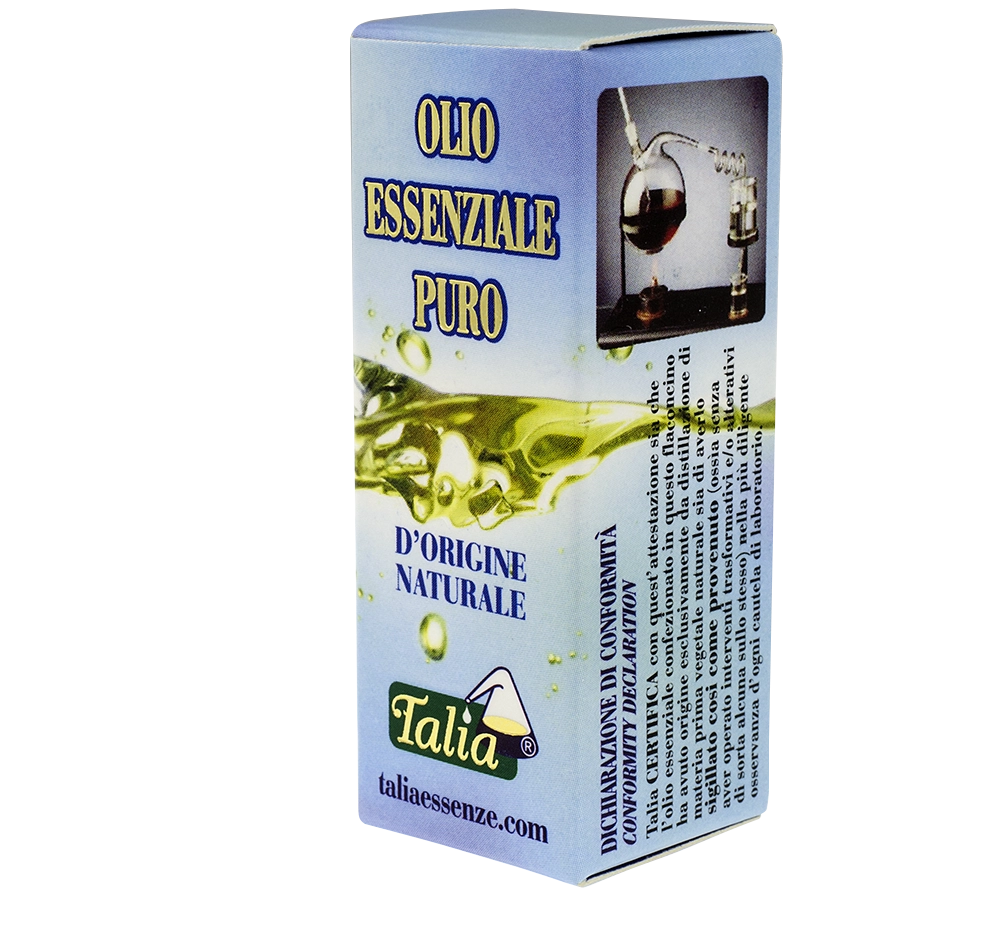
100% pure and concentrated essential oil of natural origin in a 5.8 ml (0.17 fl. oz.) glass bottle ; this product is completely free from: stabilizers, fixatives, pesticides, GMOs and treatments (even of semi-finished products) with gamma rays and has been packaged and sealed as it came, i.e., without having undergone any transformation and/or alteration of any kind and in the most diligent observance of all laboratory precautions. In accordance with EC Regulation 1334/2008 of the European Parliament and of the Council of the European Union, provided they are highly pure, many essential oils (including Greek Mastic) are declared "food flavourings" and can therefore be taken as supplements.
As per the declaration of conformity published in the brochure, this essential oil was obtained exclusively from the processing of natural plant raw materials. The
information leaflet included with the packaging contains all the information relating to the natural preparation, including the analytical bulletin, the declaration of conformity, the botanical description, the possibility of use as a " food flavoring," etc.
Attention
Absolutely avoid the " do-it-yourself" internal use of essential oils,as this can be highly dangerous. It is advisable to always proceed with a medical prescription issued exclusively by a competent and qualified professional.As per the declaration of conformity published in the brochure, this essential oil was obtained exclusively from the processing of natural plant raw materials. The
information leaflet included with the packaging contains all the information relating to the natural preparation, including the analytical bulletin, the declaration of conformity, the botanical description, the possibility of use as a " food flavoring," etc.
Extraction
Mastic essential oil is obtained by steam distillation of the oleoresin. The very low yield and lengthy processing time have always made it a truly valuable product. It appears as a pale yellow liquid with a characteristic fresh, woody, balsamic, and vaguely pine-like scent.
Affinity
Mastic essential oil harmonizes well with the essential oils of: Frankincense, Lavender, Black Pepper and Ravensara as well as with citrus oils and floral oils.
Properties
Regarding mastic resin, besides its use in perfumery, the most well-known and appreciated use was burning it (similarly to incense, usually together with it) to take advantage of the balsamic and sanitizing properties of the fumigations it performed. However, due to its beneficial effects on the oral cavity (a natural antiseptic and breath purifier), it was also used as a natural chewing gum. Mastic essential oil, completely non-toxic and non-irritating, has antimicrobial (disinfectant), expectorant, antiseptic, and stimulant properties. It is a supreme remedy in the treatment of eczema and skin ulcers; it is also an excellent anti-parasitic.
Uses
Mastic essential oil is used in dentistry and as a fragrance component in fine perfumery, a practice that has made it a highly sought-after commodity for centuries. Less commonly, it is used in the formulation of bath products, lotions, and luxury soaps. This raw material is still widely used in Middle Eastern confectionery.
Botany
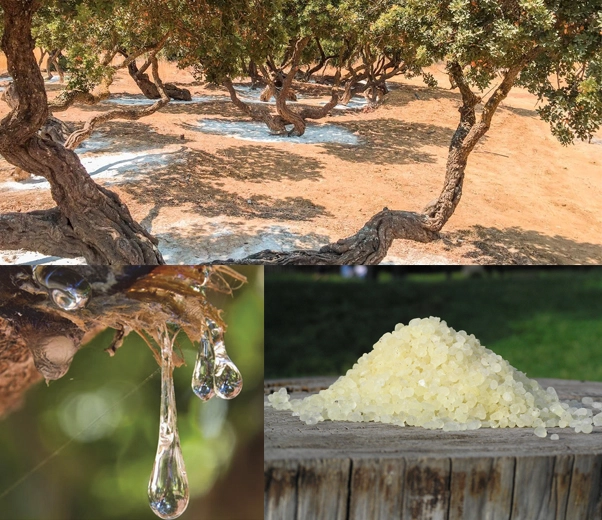
From the incisions made on the Mastic tree, an evergreen shrub native to the Mediterranean scrub, a viscous latex slowly oozes, which hardens upon exposure to the elements: this is the well-known natural oleoresin known as mastic, a highly valuable commodity found in every bazaar of the ancient world.
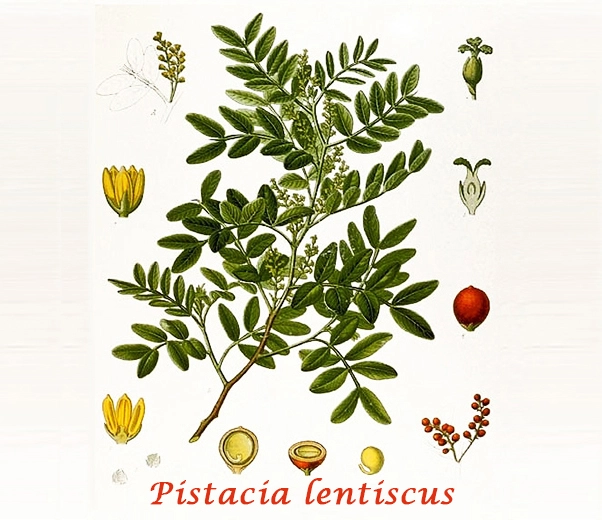
Also known as the "mastic tree", the Mastic tree exudes a strong, resinous odor. Native to the Mediterranean basin (particularly the northeastern Aegean islands), it is also found in Portugal and the Canary Islands. Growing up to three meters tall, it has leathery leaves, small reddish flowers, and a pink heartwood.
Also known as the "mastic tree", the Mastic tree exudes a strong, resinous odor. Native to the Mediterranean basin (particularly the northeastern Aegean islands), it is also found in Portugal and the Canary Islands. Growing up to three meters tall, it has leathery leaves, small reddish flowers, and a pink heartwood.
 Balsam of Peru
 Black pepper
 Cade
Cade English lavender
 Eritrean oil
 Galangal
 Galbanum
 Greek olibanum
 Greek olibanum
 Pink pepper
 Pure Greek mastic pearls
 Pure Greek mastic pearls
 Ravensara
 Rue
Rue Sudan incense
 Fine perfumery fragrances
 Vegetable oils for cosmetic use
 Essence diffusers
 Greek mastic