

Copaiba
Pure essential oil of conventional origin
Confezione: 11.3 ml bottle.
-
11,20 €
✔ 100% pure and natural · Since 1993, selected GMO-free essential oils · Certified quality · Shipping within 24/48h
Essential oils
Made exclusively from pure natural distillates of excellent quality, totally free from stabilizers and/or fixatives of any kind, our essential oils represent the best that can be found by those who, without any “ ifs ” or “ buts ”, demand – in the literal sense of the term – the 100% quintessence of nature .
- Code: 21512
- INCI: Copaifera officinalis
- CAS: 8013-97-6
- Family: Fabaceae
- Type: pure essential oil (EO)
- Variety: conventional
- Food flavoring: yes (according to EC Regulation 1334/2008)
- Extraction method: steam distillation
- Purity: 100%
- Origin: Brazil
Related accessories

Description
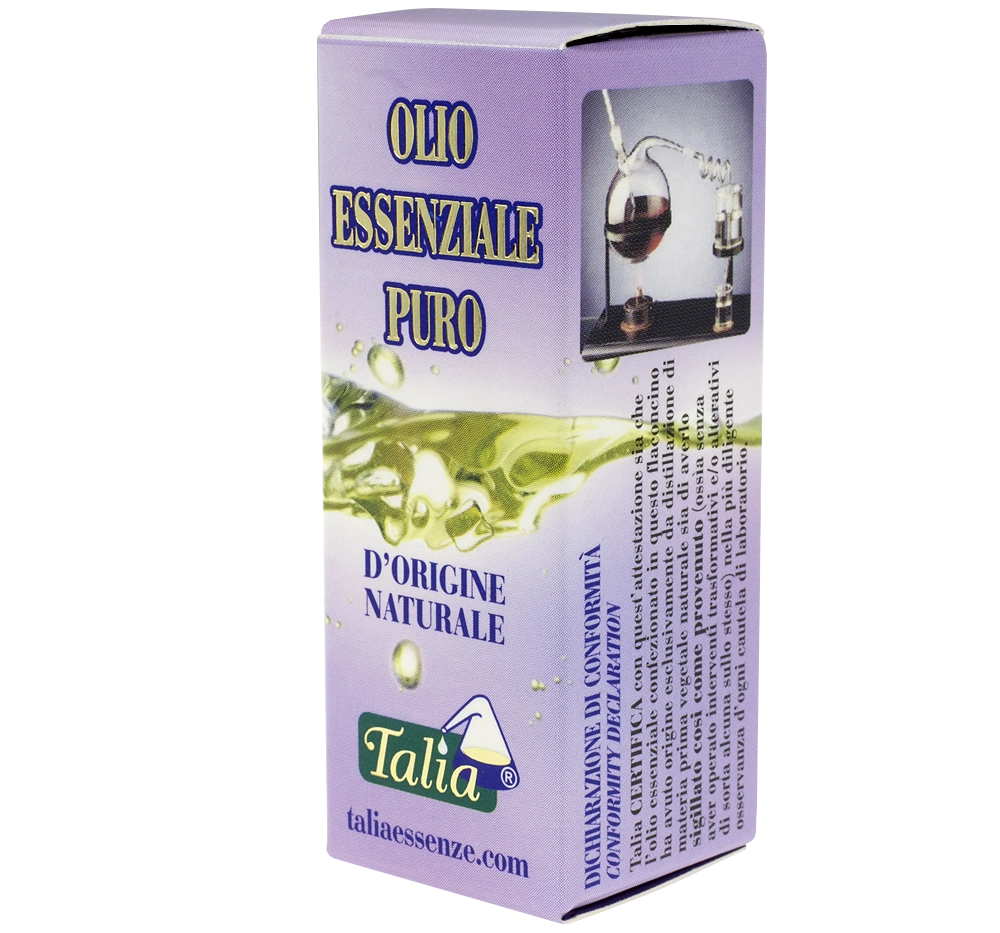
100% pure and concentrated essential oil of natural origin in an 11.3 ml (0.34 fl. oz.) glass bottle ; this product is completely free from: stabilizers, fixatives, pesticides, GMOs and treatments (even of semi-finished products) with gamma rays and has been packaged and sealed as it came, i.e., without having undergone any transformation and/or alteration of any kind and in the most diligent observance of all laboratory precautions. In accordance with EC Regulation 1334/2008 of the European Parliament and of the Council of the European Union, provided they are highly pure, many essential oils (including Copaiba) are declared "food flavourings" and can therefore be taken as supplements.
As per the declaration of conformity published in the brochure, this essential oil has been obtained exclusively from the processing of natural plant raw materials. The
information leaflet included with the packaging contains all the information relating to the natural preparation, including the analytical bulletin, the declaration of conformity, the botanical description, the possibility of use as a " food flavoring," etc.
Attention
Absolutely avoid the " do-it-yourself" internal use of essential oils,as this can be highly dangerous. It is advisable to always proceed with a medical prescription issued exclusively by a competent and qualified professional.As per the declaration of conformity published in the brochure, this essential oil has been obtained exclusively from the processing of natural plant raw materials. The
information leaflet included with the packaging contains all the information relating to the natural preparation, including the analytical bulletin, the declaration of conformity, the botanical description, the possibility of use as a " food flavoring," etc.
Extraction
Copaiba essential oil is extracted by steam distillation of the oleoresin exuded by Copaifera and appears as a light yellow liquid with a faint woody, sweet, slightly balsamic and vaguely pungent scent.
Affinity
Copaiba essential oil blends well with almost all essential oils, but especially with: Agarwood, Ambrette, Orange, Bergamot, Camphor, Noble Laurel, Lavender, Lemon, Mint, Neroli, Ravensara, Sandalwood, Tea Tree, and Red Thyme.
Properties
Few plants can boast such a well-established medicinal tradition as the Copaifera.
Its resin (Copaiba) has been the ancient remedy of the forest for centuries, the powerful natural medicine used by the indigenous populations of the Amazon. Even today, South American "curanderos" use it to treat virtually every skin problem. The essential oil obtained from Copaiba, completely non-toxic, is rich in oleic acid and linoleic acid, which are known to contribute to both skin regeneration and rehydration : for this reason, it can be considered a powerful healing agent. It also has excellent stimulating, antiseptic, anti-inflammatory, and fungicidal properties, proving effective in the treatment of skin irritations, ulcers, eczema, and psoriasis. However, the product's vaunted soothing properties for bruises, joint pain, and rheumatism remain undocumented.
Its resin (Copaiba) has been the ancient remedy of the forest for centuries, the powerful natural medicine used by the indigenous populations of the Amazon. Even today, South American "curanderos" use it to treat virtually every skin problem. The essential oil obtained from Copaiba, completely non-toxic, is rich in oleic acid and linoleic acid, which are known to contribute to both skin regeneration and rehydration : for this reason, it can be considered a powerful healing agent. It also has excellent stimulating, antiseptic, anti-inflammatory, and fungicidal properties, proving effective in the treatment of skin irritations, ulcers, eczema, and psoriasis. However, the product's vaunted soothing properties for bruises, joint pain, and rheumatism remain undocumented.
Uses
Copaiba oil is commonly used in the manufacture of lacquers and paints, and is also a raw material for various applications in the chemical industry, the most well-known of which is certainly the production of fuel (biodiesel): a single tree can produce 40 liters of fuel annually. The essence, thanks to its fixing
properties, is occasionally used in perfumery, in the formulation of bath products, in lotions, and in soap making.
properties, is occasionally used in perfumery, in the formulation of bath products, in lotions, and in soap making.
Botany
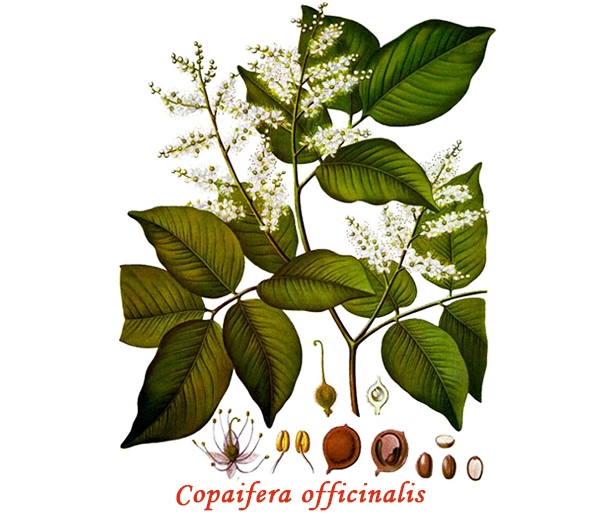
Copaifera is a large leguminous tree that grows in the South American rainforests. It reaches forty meters in height and has a sturdy trunk, hairless branches, reddish leaves, and small white flowers. Its majestic crown is distinctive. The tree's bark spontaneously exudes a thick, stimulating oleoresin called copaiba, which is highly prized and varies in color from golden to brown (depending on its essential oil content).
Related topics
Related products
 Agarwood
 Ambrette seeds
 Apple mint
 Balsam of Peru
 Bay laurel
 Benzoin
 Bitter orange
 Calabrian Bergamot
 Camphor
 Cedar wood
 Cedar wood
 Elemi
Elemi English lavender
 Field mint
 Galangal
 Galbanum
 Iris
Iris Italian lemon
 Mysore sandalwood
 Neroli
 Oudh balsamique
 Patchouli
 Peppermint
 Ravensara
 Red thyme
 Russian birch
 Scots pine
 Siberian pine
 Sweet orange
 Swiss pine
 Tea tree oil
 Fine perfumery fragrances
 Vegetable oils for cosmetic use
 Essence diffusers
 Copaiba