
Vetiver Haiti
Pure and natural essential oil
✔ 100% pure essential oil for industry and laboratory use · Tailored offers
Bulk packaging > Essential oils
A wide range of pure and natural essential oils of guaranteed quality, consistently available for any industrial application.
Highly concentrated natural compounds extracted from various parts of plants such as leaves, inflorescences, twigs, bark, and roots, consisting of the volatile molecules that give different plant species their characteristic aroma.
- Code: T1559
- INCI: Vetiveria zizanioides
- CAS: 8016-96-4
- EINECS: 282-490-8
- Family: Poaceae
- Type: pure essential oil (EO)
- Chemotype: Vetiverol (approximately 60%)
- Food flavoring: yes (according to EC Regulation 1334/2008)
- Extraction method: steam distillation
- Purity: 100%
- Origin: Haiti
Extraction
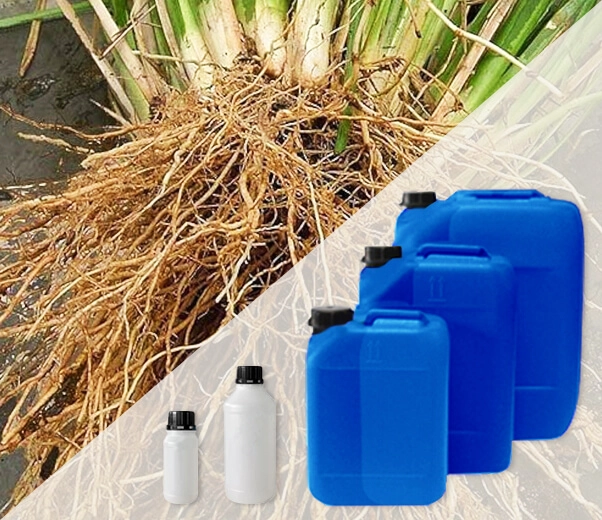
Vetiver essential oil is obtained by steam distillation of the dried and macerated roots. It appears as a viscous, amber-brown liquid with a pleasant, woody-earthy, oriental aroma.
Properties
Vetiver essential oil, non-toxic and non-irritating, has antiseptic, antispasmodic, rubefacient, and purifying properties.
It combats acne and oily skin; extremely relaxing, it is valuable for massage and bathing.
It harmonizes excellently with the essential oils of: yarrow, agarwood, ambrette, lavender, opoponax, patchouli, rose, clary sage, sandalwood, ylang-ylang, as well as oakmoss absolute.
It combats acne and oily skin; extremely relaxing, it is valuable for massage and bathing.
It harmonizes excellently with the essential oils of: yarrow, agarwood, ambrette, lavender, opoponax, patchouli, rose, clary sage, sandalwood, ylang-ylang, as well as oakmoss absolute.
Uses
The classic use of the prized vetiver essential oil is as a fixative and fragrance ingredient in soaps, cosmetics, and perfumes with a warm, oriental note. Vetiver oil is also occasionally used as a preservative in the food industry.
The relevant technical and safety documentation for the product is available upon request.
The relevant technical and safety documentation for the product is available upon request.
Botany
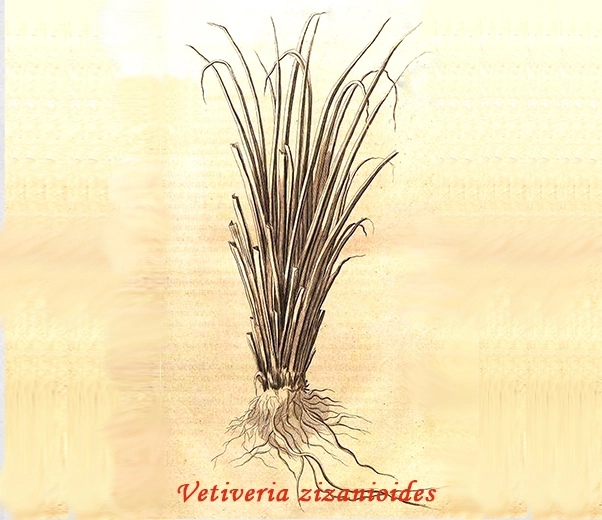
Vetiver, also known as "Khus khus", is native to southern India, Ceylon, and Indonesia. It is a fragrant and extremely hardy herbaceous perennial plant with tufts of long, narrow leaves and brown-purple flowers. Its complex network of underground rootlets that penetrate deep into the soil makes it often used to consolidate landslide-prone soils. It is grown primarily in Japan, Indochina, the Philippines, Pakistan, and South America.
Related topics
Related products
 Agarwood
 Ambrette seeds
 Angelica seeds
 Benzoin
 Birch
Birch Black Ebony
 Broom flower
 Bulgarian rose
 Cedar wood
 Cistus
 Citron
 Civet
Civet Clary sage
 Coffee roasted seeds
 Cost
Cost English lavender
 Eritrean oil
 Ethiopian olibanum
 Fern
Fern Ginger
 Incense
 Iris
Iris Juniper berries
 Lavender in bloom
 Manuka
 Moroccan chamomile
 Mysore sandalwood
 Oakmoss
 Opoponax
 Oriental Sweet amber
 Oudh balsamique
 Patchouli
 Ravensara
 Sandalwood
 Sudanese incense
 Turkish rose
 Valerian
 Vanilla
 Yarrow
 Ylang-ylang 1°
 Home fragrances
 Aroma chemicals
 Measuring instruments
 Containers
 Fine perfumery fragrances
 Vetiver Haiti