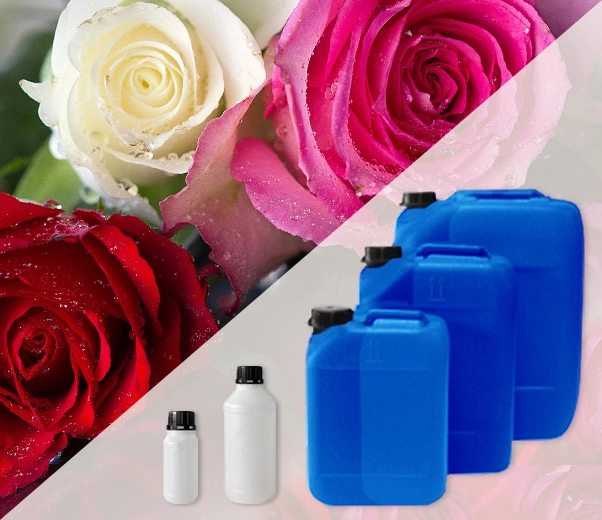
Turkish rose
Absolute essence
✔ Absolute oil guaranteed for industry and laboratory use · Tailored quotations
Bulk packaging > Absolute oils
Absolute essences are aromatic extracts obtained through solvent extraction from plant material or from the concrete. They differ from essential oils in that they contain less volatile and heavier fractions, which impart greater olfactory richness and persistence. They are mainly produced when steam distillation is not feasible or does not ensure the desired yield, as in the case of rose. Owing to their concentration and complexity, they are key raw materials in fine perfumery, cosmetics, soap making, and candle production.
- Code: T1543
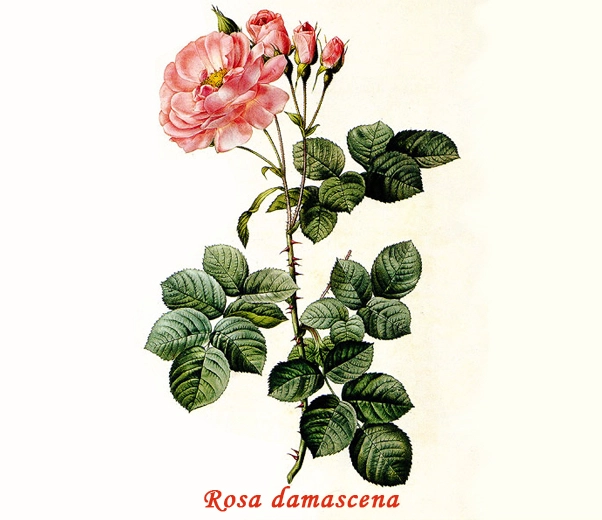
- INCI: Rosa damascena
- CAS: 8007-01-0
- EINECS: 283-289-8
- Family: Rosaceae
- Type: absolute essence (OA)
- Chemotype: Phenylethyl alcohol (minimum 60%)
- Food flavoring: yes (according to EC Regulation 1334/2008)
- Extraction method: with solvent
- Origin: Türkiye
Extraction
Rose absolute oil is obtained through solvent extraction of fresh petals. It appears as an opalescent brown liquid with a distinctive, sweet, floral, and intense pinkish scent, with a spicy-honeyed undertone.
Properties
The medicinal properties of the rose (a supreme natural anti-inflammatory) have been renowned since ancient times, and although this flower is now rarely used in herbal medicine, it played an essential role in medicine until the Middle Ages (just consider the treatise on Avicenna).
Rose oil has proven analgesic, antidepressant, antiseptic, antituberculosis, hemostatic, sedative, purifying, healing, and, above all, aphrodisiac properties. It has undoubtedly been the most noble, sought-after, and appreciated perfume since the dawn of humanity.
Rose absolute oil is renowned for being a precious natural aromatic raw material: just consider that to obtain one gram of it, almost three kilograms of fresh petals are needed (and still less than a third of the amount needed to obtain the same quantity of essential oil).
It harmonizes well with all other absolute and essential oils thanks to its ability to smooth out the top notes in the composition but, similarly to the essential oil, it gives truly excellent results when mixed with those of: Agarwood, Bergamot, Matricaria Chamomile, Clove, Geranium, Lavender, Neroli, Palmarosa, Patchouli, Black Pepper, Clary Sage, Sandalwood as well as with Benzoin absolute.
Rose oil has proven analgesic, antidepressant, antiseptic, antituberculosis, hemostatic, sedative, purifying, healing, and, above all, aphrodisiac properties. It has undoubtedly been the most noble, sought-after, and appreciated perfume since the dawn of humanity.
Rose absolute oil is renowned for being a precious natural aromatic raw material: just consider that to obtain one gram of it, almost three kilograms of fresh petals are needed (and still less than a third of the amount needed to obtain the same quantity of essential oil).
It harmonizes well with all other absolute and essential oils thanks to its ability to smooth out the top notes in the composition but, similarly to the essential oil, it gives truly excellent results when mixed with those of: Agarwood, Bergamot, Matricaria Chamomile, Clove, Geranium, Lavender, Neroli, Palmarosa, Patchouli, Black Pepper, Clary Sage, Sandalwood as well as with Benzoin absolute.
Uses
Rose absolute is widely used in fine perfumery, cosmetics, and luxury soaps.
The relevant technical and safety documentation for the product is available upon request.
The relevant technical and safety documentation for the product is available upon request.
Botany
Thought to be native to Persia, the rose is currently cultivated in Morocco, Tunisia, Bulgaria, Russia, Iran, Italy, France, India, and China. It is a small, thorny shrub up to two and a half meters tall, with light-colored, serrated leaves and beautiful, fragrant pink (or purple) flowers with thirty-six petals. There are over 150 species.
Related topics
Related products
 African geranium
 Agarwood
 Ambrette seeds
 Balsam of Peru
 Benzoin
 Bergamot
 Black pepper
 Broom flower
 Bulgarian rose
 Cedar wood
 Clary sage
 Cost
Cost English lavender
 Freesia
 Gardenia
 Ginger
 Helichrysum
 Iris
Iris Italian lemon
 Jasmine
 Jasmine
 Lemon zest
 Liquid storax
 Lovage leaves
 Matricaria chamomile
 Mysore sandalwood
 Narcissus
 Neroli
 Oakmoss
 Orange blossom
 Palmarosa
 Palo Santo fruit
 Parsley seeds
 Patchouli
 Sandalwood
 Sweet fennel
 Tuberose
 Vetiver
 Vetiver Haiti
 Violet
 Ylang-ylang 1°
 Home fragrances
 Aroma chemicals
 Measuring instruments
 Containers
 Fine perfumery fragrances
 Turkish rose