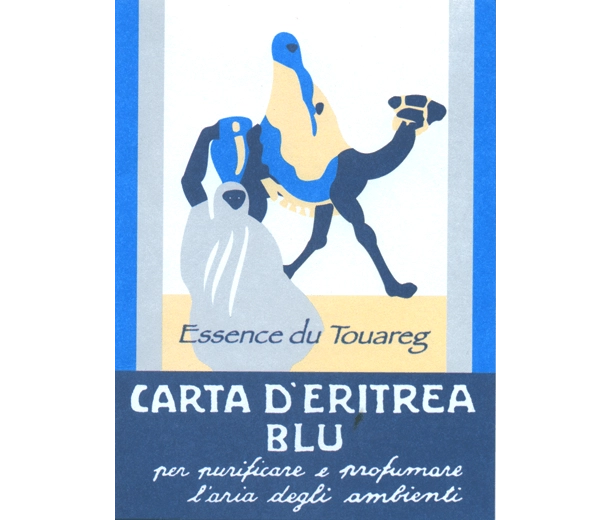



Blue Eritrean paper
A refined aromatic cult product
Packaging: booklet of 24 strips
-
6,20 €
Aromatic healing papers
In the early days of modern industrial society, aromatic officinal papers— formerly known as "medicinal papers" —represented a genuine medicinal remedy for various ailments in Europe, as well as the only product on the market capable of both deodorizing and sanitizing environments. Tents, hospitals, colleges, and damp homes, for example, were all places at risk of epidemics: for this reason, they were routinely purified with fumigations diffused by the flameless combustion of these papers, which nevertheless released a pleasant scent.
- Code: 00652
- Note type: woody, dry, balsamic
- Origin: Italy
Description
The most classic of air-freshening products.
Among the scented papers once so popular, Eritrean Aromatic Paper is by far the best-known. Blue Eritrean Paper is an intriguing variation on the well-known classic version of this product. Made with premium aromatic raw materials native to the Berber Atlas (including cedarwood essential oil), the smoke it releases during combustion is a long-lasting deodorant and an effective anti-tobacco product. Completely non-toxic, it pleasantly scents and purifies the air in any room; the nascent oxygen it releases during burning kills pathogenic bacteria always present in the air. When burned in rooms, it fills the air with a fresh scent while simultaneously releasing nascent oxygen; furthermore, the pleasant "aromatic cloud" released when a strip of it is lit is not only an effective antiseptic, but also a proven long-lasting deodorant and an excellent insect repellent.
Furthermore, by leaving a few strips in a wardrobe or drawer, it will release a characteristic fresh scent for months and months that will pleasantly permeate everything stored there.
Among the scented papers once so popular, Eritrean Aromatic Paper is by far the best-known. Blue Eritrean Paper is an intriguing variation on the well-known classic version of this product. Made with premium aromatic raw materials native to the Berber Atlas (including cedarwood essential oil), the smoke it releases during combustion is a long-lasting deodorant and an effective anti-tobacco product. Completely non-toxic, it pleasantly scents and purifies the air in any room; the nascent oxygen it releases during burning kills pathogenic bacteria always present in the air. When burned in rooms, it fills the air with a fresh scent while simultaneously releasing nascent oxygen; furthermore, the pleasant "aromatic cloud" released when a strip of it is lit is not only an effective antiseptic, but also a proven long-lasting deodorant and an excellent insect repellent.
Furthermore, by leaving a few strips in a wardrobe or drawer, it will release a characteristic fresh scent for months and months that will pleasantly permeate everything stored there.
History
The production of medicinal papers was entirely artisanal and the almost exclusive prerogative of specialized pharmacists, who had special formulations for preparing various fumigant papers: anti-asthmatic, antirheumatic, antiseptic, etc., as specific medical/therapeutic treatments for various health problems.
The origins of the Eritrean Aromatic Paper date back to the Italian colonial era, during Fascism.
In 1927, the Piacenza-born chemist and pharmacist Dr. Vittoriano Casanova (awarded the gold medal by the Order of Pharmacists of the Province of Piacenza), after three years of study, created the famous Eritrean Paper. During a trip to the "land of aromas," between Eritrea and Somalia, he discovered and appreciated the natural resins and essences used in East Africa. Upon his return to Italy, Casanova created a formula containing over thirty ingredients, including various essential oils and absolutes. Initially, the preparation was made by pulverizing the solid ingredients in a mortar and then dissolving them in a vegetable alcohol, finally adding the natural oils. The resulting solution, following the procedures for making any other medicinal paper, was then soaked in the solution on a suitably treated cellulose support (common bibulous paper). This was followed by several days of immersion, drying, and finally cutting. At this point, the product was ready to be burned without a flame, like incense.
Of the various medicinal papers on the market in the European kingdoms between the 16th and the mid-20th centuries, only two probably remain on the market today, almost certainly the last in their history. Both were deodorant/antiseptic, highly popular, and have a long tradition: the Italian " Carta d'Eritrea " and the French " Papier d'Arménie."
The origins of the Eritrean Aromatic Paper date back to the Italian colonial era, during Fascism.
In 1927, the Piacenza-born chemist and pharmacist Dr. Vittoriano Casanova (awarded the gold medal by the Order of Pharmacists of the Province of Piacenza), after three years of study, created the famous Eritrean Paper. During a trip to the "land of aromas," between Eritrea and Somalia, he discovered and appreciated the natural resins and essences used in East Africa. Upon his return to Italy, Casanova created a formula containing over thirty ingredients, including various essential oils and absolutes. Initially, the preparation was made by pulverizing the solid ingredients in a mortar and then dissolving them in a vegetable alcohol, finally adding the natural oils. The resulting solution, following the procedures for making any other medicinal paper, was then soaked in the solution on a suitably treated cellulose support (common bibulous paper). This was followed by several days of immersion, drying, and finally cutting. At this point, the product was ready to be burned without a flame, like incense.
Of the various medicinal papers on the market in the European kingdoms between the 16th and the mid-20th centuries, only two probably remain on the market today, almost certainly the last in their history. Both were deodorant/antiseptic, highly popular, and have a long tradition: the Italian " Carta d'Eritrea " and the French " Papier d'Arménie."
 aromatic eritrean paper
 Blue Eritrean Paper
 Cedar wood
 Cedar wood
 Classic Armenian paper
 Rose Armenian paper
 White Armenian paper
 Japanese incense
 Wooden scenters
 Tibetan rituals
 Resins and balms
 Blue Eritrean paper